AerinX Lessons Learned

After we suffered several major blows on our journey with AerinX, and our original plans and hopes seem to be deteriorating, I find it one of my most important and valuable duties to face and analyze the causes of how things turned out, however painful it is. I find this retrospection of utmost importance not to find people to blame or ruminate on what could have been, but for clarity, to draw and learn the lessons, and make sure I (and we) can do better next time.

Continue reading “AerinX Lessons Learned”

Why AerinX

I recently read an interesting book called Start with Why by Simon Sinek. Although I sometimes found it repeating itself and oversimplifying reality, I can still recommend reading it because I found it very inspiring and thought-provoking.

The book argues that most companies and most people only focus on WHAT they do and HOW they do it, but very often we all lose WHY we are actually doing things in the first place. We forget our true purpose behind our everyday struggles. And that is a problem in itself, which can lead to even more significant negative consequences. This made me wonder and think more deeply about why I actually work at AerinX.

Continue reading “Why AerinX”

Business Value vs Cost in Software Development

This post has been my debt for a long time now, primarily toward my dear colleagues at AerinX. I’ve been thinking about this topic for quite a while, collecting and organizing my thoughts, trying to create a structure and an arc that makes the story somehow digestible. My intention and goal here are to give my colleagues and everyone else a look into my way and framework of creating solutions for specific customer problems or requirements and then deciding which solution to choose of the several possible. My purpose is to make you understand the background of my everyday decisions better and ingrain this framework into our company’s culture.

Continue reading “Business Value vs Cost in Software Development”

The Importance of Writing

I am a graphomaniac. I write a lot. I write blogs, I write a diary, and I write a lot in my work as well. And I profit a lot from it!

Along with my career, many people told me how much better, easier, and more productive it is to work in such a structured, organized, and transparent environment that is a characteristics of projects and organizations run by me, compared to the chaos and disorder experienced in a lot of projects. Order and structure have many aspects and ingredients. In this article, I will analyze the role and importance of writing, and share some of my related thoughts and experiences.

Continue reading “The Importance of Writing”

The Power of Work-In-Progress Limitation

BrokenChain

Once upon a time, there was a company with a smaller internal IT development team (somewhere between 3 and 10 people, I can’t remember). They were working on a few critical and not-so-critical software systems of the company, doing various developments, bug fixes, and some maintenance tasks. The company did great in their market, they were developing and growing well, but they had to move fast if they’d wanted to stay ahead. There were new customers, new products, and new ideas. This meant a lot of work and pressure for our poor IT department because the future depended on it. There was always much more to do than possible with this handful of IT people. The business came up with newer and newer ideas and development requests. On top of that, everything seemed to be extremely important and very urgent.

So what did our poor IT department do? They felt the pressure and knew that the future of the company was in their hands, so they tried to work harder and harder and hoped it was going to work out somehow. But the work seemed to always be more than a week ago. It seemed as if they were moving backward, not ahead. ‘If only there were a week of undisturbed work, we could finally catch ourselves,’ they said. They didn’t have time to administer tasks or build a system with processes. They didn’t have the capacity to measure, estimate or plan anything because they were always in an emergency mode, only trying to put out the fire. They had to keep swimming or they would just sink like a stone.

Later they tried to create task-lists in different spreadsheet files, but those soon got outdated and out of hand because the new requests were just flowing in uncontrollably. Always something new, something else, something more important and more urgent.

Continue reading “The Power of Work-In-Progress Limitation”

How NOT to Develop an Innovative Software Product

Innovation.png

I owe myself this article for years. Since now I am in the same shoes again, for the umpteenth time, I decided to take some time and write this. I am working in the software industry, in software consulting to be more precise. That means what I (and the companies I work at) do is building software solutions for the unique problems of our customers. These solutions are customized and expensive, made for large enterprises who have deep-enough pockets to pay for the tailor to come to the house.

But every time and again, someone in the company comes up with the idea (or we receive a grant from some innovation fund) of building some software product, that we can create once, then sell it to dozens of customers and make a lot of money. Great idea, sounds terrific, software has the lowest (zero) manufacturing cost once it is designed, after all. Selling it once or a thousand times cost the same from software development perspective. Besides, who else would be more capable of building a successful software product than a software consulting company who has a track record of developing a series of complex, cutting-edge software systems, beating technological challenges, and coming up with novel solutions for the complicated problems of their customers?

Yeah, right, that is all true, but there are some fundamental problems and challenges in this otherwise noble endeavor. I participated in and lead several such initiatives and projects by now, most of them within software consulting companies, and I failed miserably so many times. So I decided to collect, organize and put these experiences down on paper to help myself, my current company, and many others, not to commit the same mistakes as I did.

Continue reading “How NOT to Develop an Innovative Software Product”

The Magic of Scrum Estimation

Planning-Poker-Cards

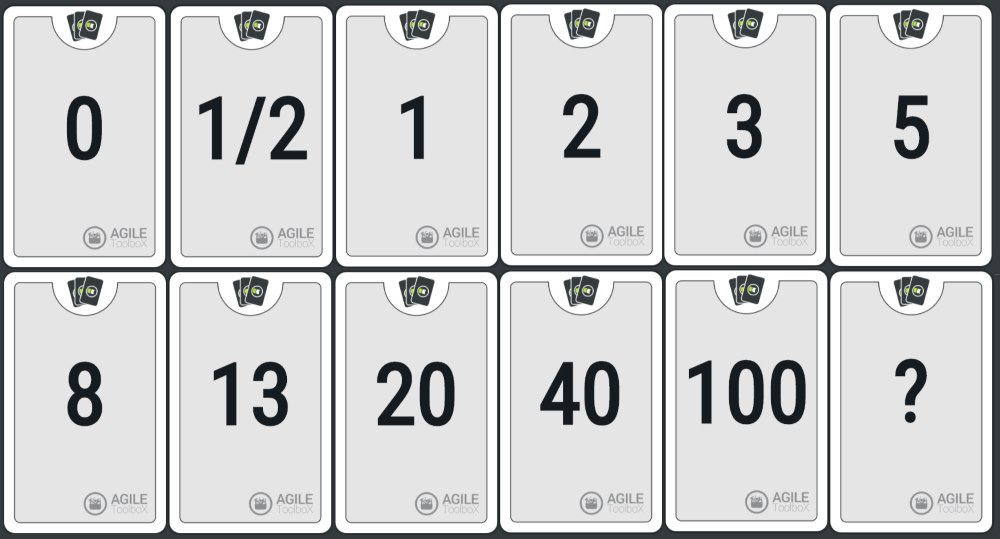
I am working in IT software consulting. We are doing software development projects for the unique, custom problems and requirements of our customers. These projects can be very complex, long, and very often involves large teams. When a new project is on the horizon, we have to understand the problem, plan a solution, and estimate how much time and money it will take. Well, this is the tricky part, probably the most challenging task in this industry: to give a reliable estimation for a project.

Continue reading “The Magic of Scrum Estimation”