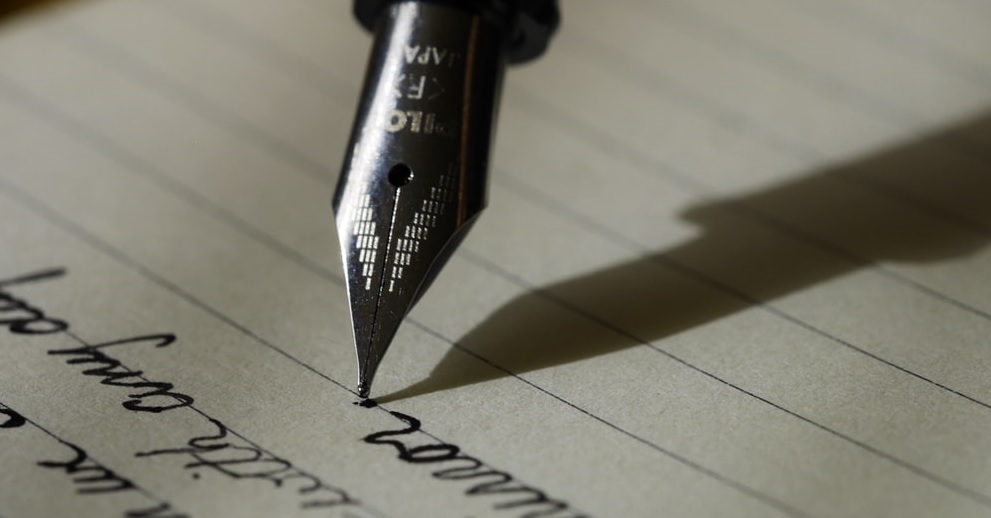
I am a graphomaniac. I write a lot. I write blogs, I write a diary, and I write a lot in my work as well. And I profit a lot from it!
Along with my career, many people told me how much better, easier, and more productive it is to work in such a structured, organized, and transparent environment that is a characteristics of projects and organizations run by me, compared to the chaos and disorder experienced in a lot of projects. Order and structure have many aspects and ingredients. In this article, I will analyze the role and importance of writing, and share some of my related thoughts and experiences.
I can identify four different aspects and areas where I can profit from writing in my work and other parts of my life.
1) Thinking through things and seeing clearly
People function and think in many different ways. Some listen to music, some need to walk or move, some close their eyes, some draw, and some write. To me – and many others – it is difficult to see through complex topics and problems in my head only, without any visible external handles. Very quickly, I run into not being able to see the whole thing in one piece, and I cannot keep all parts / points / problems in my head. I need to write things down in some form to see it from an external point of view, to get a manageable, clear, structured something from the pieces that are swirling in my head. I can hardly put something into a logical structure without writing or drawing. This is why I write lists, memos, documents, specifications, etc.
2) Transferring information to others
Although some people can comprehend and solve complex problems, concepts, or tasks purely in their head without any external tools, most people can benefit a lot from some structured written or drawn document besides oral communication when embracing new information. This can make the understanding easier and more effective. Since we are dependent on others’ work when cooperating in most jobs, we need to transfer information to each other very often. The effectiveness of this communication can be improved when we emphasize the essence of our messages in writing as well, whether it is a need, a problem, a solution, or a series of steps.
3) Preventing the amortization of information
Information in people’s heads amortizes. Faster and more than you think. We talk through and agree on something, and everybody is on the same page, everybody knows what to do. But two hours later, we have to recollect our thoughts to recall every detail. A day later, we can only remember half of it, and in a week, we have to start the whole discussion from the beginning if we don’t put anything on paper.
The human brain is capable of extraordinary feats. Understanding complex problems, coming up with solutions, making order and structure from chaos, building associations between seemingly unrelated things, or imagining and creating something that never existed before. Truly amazing! But our brain is not designed to memorize lots of raw data for a longer time. A few people are good at this, but most of us are appallingly bad at it. I certainly am, and I don’t even try anymore. Even more so because we have tools designed for exactly this purpose: to remember for us, so we don’t have to. Your brain forgets, unlike your mailbox, chat application, your file drive, or your task manager application. They remember even when you’d like to forget!
I work in an organized manner not because I can remember lots of things. Quite the contrary! I am orderly because I know exactly how much I forget, so I don’t even try to keep anything in my head. I rather write everything into tools and applications that do a much better job at remembering than me. That’s why I write memos about the shortest and most trivial meetings as well. That’s why I put every little task into the task manager tool with detailed descriptions and comments. That’s why I put every event and deadline into my calendar application and send meeting requests to everybody affected. That’s why I write lots of emails and chat messages to people affected by the actual information. Because I know from experience that the fresh and complete information in my hands will be partly or fully lost unless I put it into some kind of writing. And when relevant and essential information is lost, sooner or later it will need to be rebuilt, for several times the cost compared to writing it down the first time.
4) Reducing stress and increasing focus
Writing down things has another pleasant consequence or rather side-effect. To me, it can be stressful when several things are whirling in my head that I am not supposed to forget. This makes it much harder to focus on the task at hand. While I am doing one thing, it keeps popping up in my head: “Oh, and also this and that, don’t forget those!” I can handle these “voices” very effectively by writing them down. I create a new task in my task manager solution, I write a memo, I write a comment, I send a message to someone, etc. And that’s it, I don’t have to keep them in my head anymore, I don’t have to deal with them for a while, I am free to forget them and focus on what’s right before my eyes. And focus is one of the foundations of productivity.
Whenever something marginal or unrelated comes to mind (which is the nature of mind that we’ll never be able to prevent), I write it to its appropriate place and continue the work without letting myself (completely) distracted from the task at hand.
Conclusion
I am not necessarily the role model to follow. I know I can do overkills with taking notes and writing, whether we’re talking about length, detail, or frequency. But still, I encourage you to put more things into writing, which you can profit from both individually and collectively!
In my experience, this takes much less time and effort than it seems at first sight. Spend 5 minutes on a short memo after an hour-long meeting! Write a one-minute comment in the ticketing system after the 3-hour-long development you just finished! Spend half a minute to write a short chat message with only three bullets after discussing something with a colleague and agreeing on a solution! The secret is frequency and consistency, not length, quality, or style. A little extra effort in the present, huge value in the longer term!

 Zol's Work